
Micronutrients You’re Probably Deficient In (India Edition)
Micronutrient deficiencies are common in India despite diverse diets, largely due to lifestyle habits and food choices. Key nutrients like Vitamin B12, Vitamin D, iron, calcium, magnesium, zinc, and omega-3 fatty acids are often lacking, leading to fatigue, weak immunity, and poor overall health. Simple changes—like eating a varied diet, adding nuts and seeds, improving sunlight exposure, and timing meals wisely—can help bridge these gaps and significantly improve long-term well-being.
NUTRITION
4/19/20263 min read
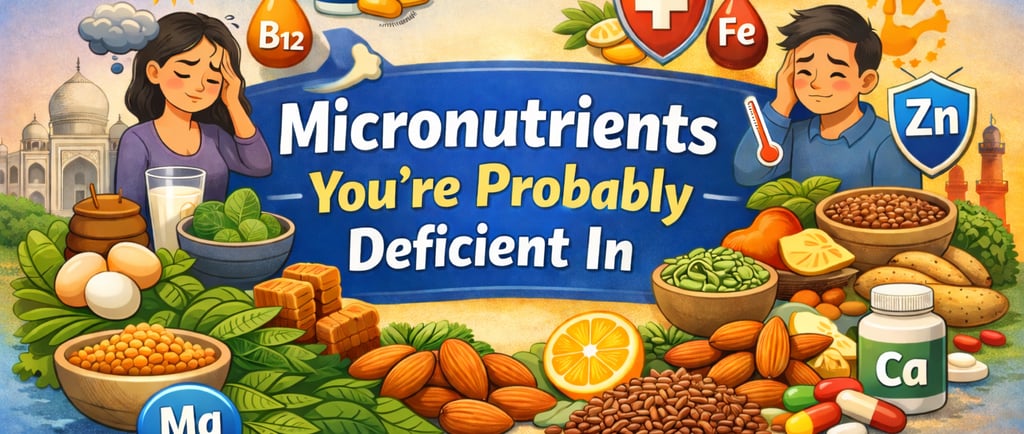
When we talk about nutrition, most people focus on calories, protein, carbs, or fats. But there’s a quieter, often ignored side of nutrition that plays an equally critical role in your health—micronutrients.
Micronutrients include vitamins and minerals that your body needs in small amounts but are essential for everything from immunity and energy to brain function and bone health. Despite India’s diverse food culture, deficiencies in several key micronutrients are surprisingly common—even among people who eat “well.”
Let’s break down the most common micronutrient deficiencies in India, why they happen, and how you can fix them.
1. Vitamin B12: The Silent Energy Killer
Why it matters:
Vitamin B12 is crucial for nerve function, red blood cell formation, and energy production. Low levels can cause fatigue, brain fog, tingling sensations, and even depression.
Why Indians are at risk:
A large portion of India follows vegetarian or mostly plant-based diets. The problem? B12 is found almost exclusively in animal products.
Common signs of deficiency:
Constant tiredness
Memory issues
Weakness or dizziness
Numbness or tingling in hands/feet
How to fix it:
Include dairy (milk, curd, paneer) if you consume it
Fortified cereals and nutritional yeast
Eggs, chicken, and fish (if non-vegetarian)
Consider supplements if you’re strictly vegetarian or vegan
2. Vitamin D: The “Sunshine Vitamin” You’re Still Missing
Why it matters:
Vitamin D supports bone health, immunity, and even mood regulation.
Why Indians are deficient despite abundant sunlight:
Indoor lifestyles (office jobs, screen time)
Pollution blocking UV rays
Darker skin requires more sun exposure
Sunscreen use
Common signs:
Bone pain
Frequent infections
Fatigue
Low mood
How to fix it:
Get 15–30 minutes of sunlight exposure daily (preferably morning)
Include foods like egg yolk, fortified milk, and fatty fish
Supplements are often necessary after testing
3. Iron: Especially Low in Women
Why it matters:
Iron is essential for hemoglobin, which carries oxygen in your blood.
Why deficiency is widespread in India:
High prevalence of vegetarian diets
Menstruation in women
Poor iron absorption due to tea/coffee consumption with meals
Common symptoms:
Fatigue
Pale skin
Hair fall
Shortness of breath
How to fix it:
Eat iron-rich foods: spinach, beetroot, jaggery, lentils
Combine with Vitamin C (lemon, amla) to boost absorption
Avoid tea/coffee immediately after meals
Include non-veg sources like red meat, chicken liver if possible
4. Calcium: Not Just About Milk
Why it matters:
Calcium is essential for strong bones, teeth, and muscle function.
Why Indians fall short:
Low dairy intake in some regions
Lactose intolerance
Poor Vitamin D levels affecting absorption
Signs of deficiency:
Weak bones
Muscle cramps
Brittle nails
How to fix it:
Milk, curd, paneer
Ragi (a powerhouse often overlooked)
Sesame seeds (til)
Almonds and leafy greens
5. Magnesium: The Forgotten Mineral
Why it matters:
Magnesium helps regulate muscle and nerve function, blood sugar, and sleep.
Why deficiency happens:
Refined food consumption (maida, polished rice)
Low intake of nuts, seeds, and whole grains
Symptoms:
Muscle cramps
Anxiety
Poor sleep
Fatigue
How to fix it:
Nuts (especially almonds, cashews)
Seeds (pumpkin, sunflower)
Whole grains and legumes
Dark chocolate (yes, in moderation!)
6. Zinc: Your Immunity Booster
Why it matters:
Zinc supports immunity, wound healing, and skin health.
Why Indians may lack it:
Plant-based diets contain phytates that reduce zinc absorption
Low intake of nuts and seeds
Signs:
Frequent colds
Hair loss
Acne or slow wound healing
How to fix it:
Pumpkin seeds, sesame seeds
Chickpeas and lentils
Dairy and meat (if consumed)
7. Omega-3 Fatty Acids: Brain Food Missing from Your Plate
Why it matters:
Omega-3s support brain health, heart health, and reduce inflammation.
Why deficiency is common:
Low consumption of fatty fish
High intake of omega-6 oils (refined vegetable oils)
Symptoms:
Dry skin
Poor concentration
Mood swings
How to fix it:
Flaxseeds (alsi), chia seeds, walnuts
Mustard oil (traditional but underrated)
Fatty fish like rohu, mackerel (bangda)
Why Are These Deficiencies So Common in India?
Despite having access to diverse foods, several lifestyle and dietary patterns contribute to micronutrient gaps:
Over-reliance on carb-heavy meals (rice, roti)
Low dietary diversity
Excessive processed foods
Cultural dietary restrictions
Poor awareness about balanced nutrition
Simple Tips to Improve Your Micronutrient Intake
You don’t need an expensive diet—just smarter choices:
Eat the rainbow: Include different colored fruits and vegetables
Switch to whole foods: Replace refined grains with whole grains
Add seeds and nuts daily: Small quantities, big benefits
Don’t skip sunlight: It’s free and essential
Time your beverages: Avoid tea/coffee right after meals
Consider testing: Blood tests can reveal hidden deficiencies
Micronutrient deficiencies don’t always show dramatic symptoms at first—but over time, they quietly impact your energy, immunity, and overall health.
The good news? Most of these deficiencies are completely reversible with small, consistent changes in your diet and lifestyle.
Instead of focusing only on “eating enough,” start focusing on eating right.
Your body doesn’t just need food—it needs the right nutrients to thrive.
DeepNutricare & Wellness
Your Trusted Health Partner
dnutricare@gmail.com
9205232987
© 2026. All rights reserved.
Follow Us
Policies
Contact us:
Get in Touch
Quick Links